






Retirement may seem far away when you are building your career, running a business, or managing everyday financial responsibilities. However, the decisions you make today can have a significant impact on the quality of life you enjoy in retirement.
In Kenya, pension and retirement benefit schemes provide an important way for individuals to build financial security for the future. With proper planning, consistent contributions, and informed investment decisions, retirement savings can become an important foundation for long-term financial independence.

At TM Financial Consultancy, we believe retirement planning should not be something people think about only when they are approaching retirement. It should be part of a person’s overall financial strategy from an early stage.
What Is a Pension?

A pension is a retirement savings arrangement designed to provide financial benefits when a person reaches retirement or otherwise becomes eligible to receive retirement benefits.
Contributions are generally invested over time, allowing retirement savings to potentially grow through investment returns. The exact benefits a member eventually receives depend on the type of scheme, contributions, investment performance, applicable rules, and other factors.
Kenya’s retirement benefits sector is regulated and supervised by the Retirement Benefits Authority (RBA), whose mandate includes regulating and supervising retirement benefits schemes and protecting the interests of members and sponsors.
The Main Types of Pension Schemes in Kenya
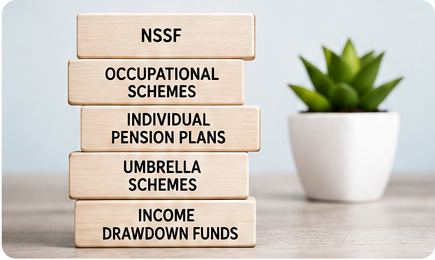
The Kenyan retirement benefits system includes several types of schemes.
1. NSSF

The National Social Security Fund (NSSF) is a national retirement benefits scheme established to provide basic financial security to members in retirement, among other benefits.
The NSSF framework was transformed from a provident fund into a pension scheme under the NSSF Act No. 45 of 2013.
NSSF is an important component of retirement planning for Kenyan workers, but individuals may also have additional retirement savings arrangements depending on their employment and personal circumstances.
2. Occupational Pension Schemes

An occupational retirement benefits scheme is established by an employer for its employees.
Employers can establish their own scheme or participate in an umbrella retirement benefits scheme.
For employees, occupational schemes can provide a structured way of saving for retirement, particularly where both the employee and employer make contributions.
3. Individual Pension Plans

An individual pension plan is designed for people who want to voluntarily save for retirement independently of an employer-sponsored scheme.
This can be particularly useful for:
- Self-employed individuals
- Entrepreneurs
- Freelancers
- Professionals
- Employees who want additional retirement savings
- Individuals seeking greater control over their retirement planning
The RBA maintains lists of registered individual pension plans, helping consumers identify schemes operating within the regulated retirement benefits framework.
4. Umbrella Retirement Benefits Schemes
Umbrella schemes allow different employers, particularly smaller businesses, to participate in a common retirement benefits arrangement rather than establishing completely separate schemes.
This can make structured retirement saving more accessible to small and medium-sized businesses.
5. Income Drawdown Funds
Retirement planning does not end when you stop working.
An income drawdown fund can receive accumulated retirement benefits and invest those funds while providing regular income to a retired member, subject to the applicable rules.
This can be an important consideration for people who want their retirement savings to provide income over time rather than simply receiving a lump sum.
Defined Contribution vs Defined Benefit
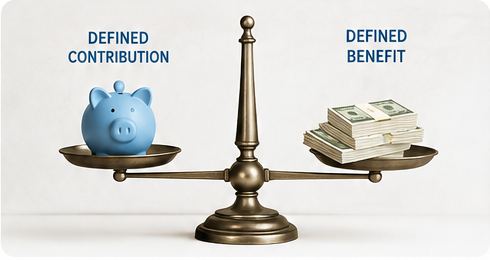
One of the most important distinctions when understanding pension schemes is the difference between Defined Contribution (DC) and Defined Benefit (DB) schemes.
Defined Contribution Scheme
In a defined contribution scheme, the contributions made by the member and/or employer are defined, while the eventual retirement benefit depends on factors such as contributions, investment returns, expenses, and the performance of the fund.
In simple terms:
Contributions + Investment Returns − Applicable Expenses = Retirement Fund Value
The final retirement benefit is therefore not necessarily known in advance.
Defined Benefit Scheme
In a defined benefit scheme, the retirement benefit is calculated using a predetermined formula, which can take factors such as pensionable salary and years of service into account.
Understanding which type of scheme you belong to is important because it affects how your retirement benefits are calculated.
Why Should You Start Saving for Retirement Early?

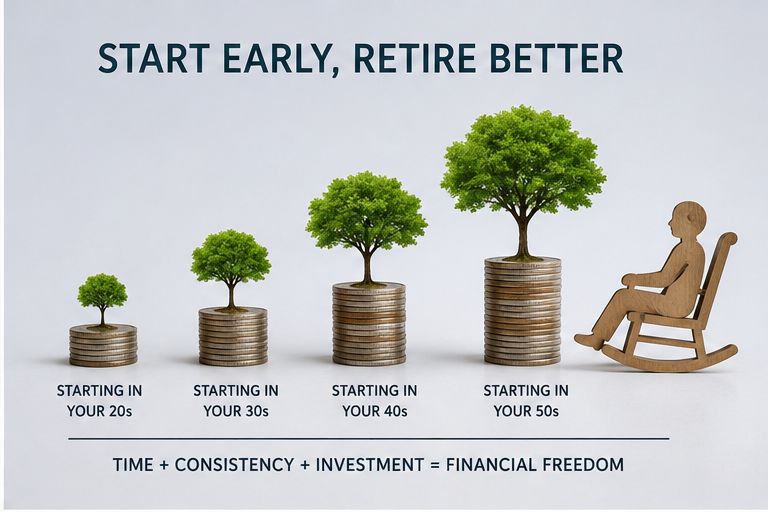
One of the greatest advantages of starting early is time.
Retirement savings have the opportunity to benefit from investment growth over many years. The longer your money remains invested, the more opportunity it has to accumulate returns.
For example, someone who starts saving consistently in their 20s generally has a longer investment period than someone who waits until their 40s or 50s.
This does not mean that it is ever “too late” to start. If you have not started saving for retirement, the most important step is to develop a realistic plan based on your current financial position.
How Much Should You Save for Retirement?
There is no single percentage that is appropriate for everyone.
The amount you need depends on factors such as:
- Your current income
- Your age
- Your expected retirement age
- Your lifestyle
- Existing retirement savings
- Expected investment returns
- Debts and other financial obligations
- Healthcare and family responsibilities
- Other sources of retirement income
Rather than focusing only on a fixed percentage, consider creating a retirement plan that estimates how much you may need at retirement and how much you should save today to work toward that goal.
The Importance of Investment Returns

Retirement savings are generally invested rather than simply kept as cash.
Pension schemes can invest in different asset classes within the applicable regulatory investment framework. Investment performance therefore plays an important role in the growth of retirement savings.
However, investment returns are not guaranteed. Investors should understand the risks associated with their retirement fund’s investment strategy and consider their long-term objectives.
The RBA provides regulatory oversight of retirement benefits schemes and publishes information on registered schemes and industry developments.
Pension and the Self-Employed

Being self-employed does not mean you should ignore retirement planning.
Entrepreneurs and freelancers may not have an employer automatically making retirement contributions on their behalf, making personal retirement planning particularly important.
A self-employed person can consider an appropriate registered individual pension arrangement and contribute consistently according to their financial capacity.
The key is to treat retirement saving as a long-term financial commitment rather than an occasional activity.
Common Pension Mistakes to Avoid
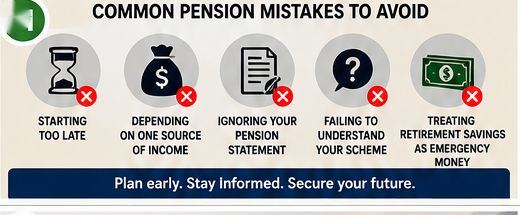
1. Starting Too Late
Waiting until retirement is approaching can make the required savings burden significantly greater.
2. Depending Only on One Source of Retirement Income
It may be risky to rely entirely on one retirement income source. A broader financial plan may include pension savings, investments, business assets, property, or other appropriate sources of income.
3. Ignoring Your Pension Statement
Members should regularly review their pension information and confirm that contributions are being properly recorded.
Retirement benefits schemes are expected to provide annual benefit statements to members.
4. Failing to Understand Your Scheme
You should know:
- How much you contribute
- Whether your employer contributes
- How your money is invested
- What fees apply
- What benefits are available
- What happens when you change jobs
- What happens when you retire
5. Treating Retirement Savings as Emergency Money
Retirement savings are designed for long-term financial security. Before withdrawing or accessing retirement funds, understand the applicable rules and the potential impact on your future financial position.
Pension Planning Is More Than Saving Money

A successful retirement plan should consider more than the amount sitting in your pension account.
It should also consider:
Income: How much income will you need after retirement?
Expenses: Which expenses are likely to continue?
Healthcare: How will you handle medical expenses?
Debt: Will you still have significant debts when you retire?
Investments: Do you have other investments outside your pension?
Lifestyle: What kind of retirement lifestyle do you want?
Legacy: Do you have assets or financial responsibilities you want to leave to your family?
Thinking about these questions early can help you build a more comprehensive retirement strategy.
How TM Financial Consultancy Can Help

At TM Financial Consultancy, we help individuals, entrepreneurs, and businesses approach financial planning with greater clarity and confidence.
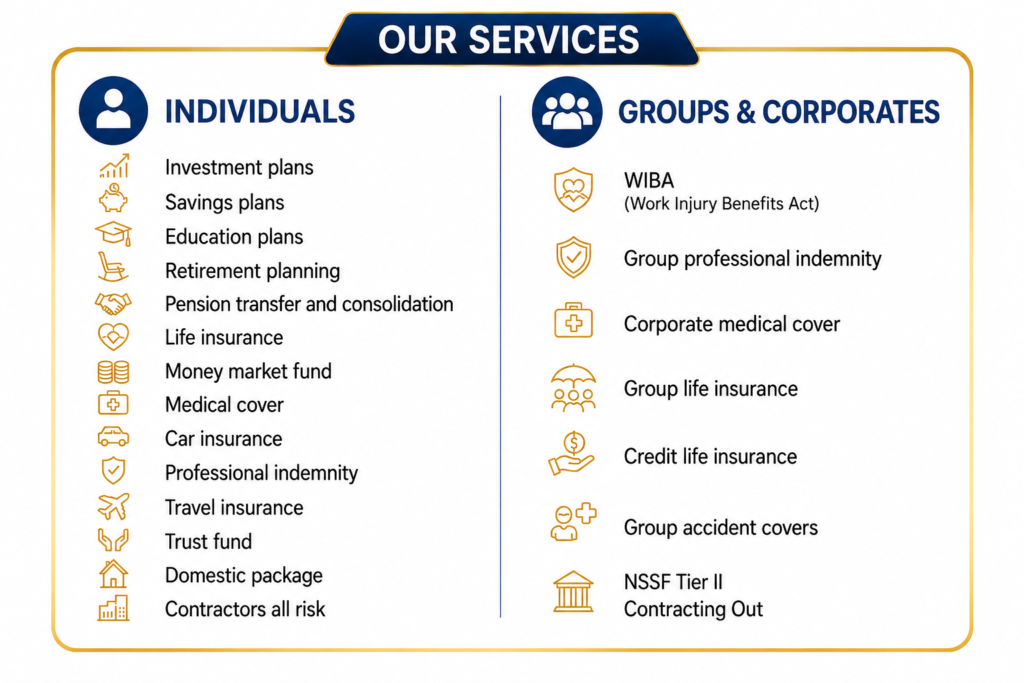
Our financial consultancy services include:
- Financial planning and advisory
- Retirement planning
- Investment planning
- Budgeting and financial management
- Business financial consultancy
- Financial analysis
- Risk management
- Business growth and financial strategy
Our goal is to help clients understand their financial position, establish realistic goals, evaluate their options, and develop strategies that support their long-term objectives.
Start Planning Your Retirement Today

Retirement planning is not only for people who are close to retirement.
Whether you are 25, 35, 45, or 55, it is important to understand where you stand financially and what steps you can take toward a more secure future.
The earlier you understand your retirement needs, the more time you have to plan, save, invest, and adjust your strategy.
Your future financial security starts with the decisions you make today.
At TM Financial Consultancy, we are committed to helping you make those decisions with knowledge, clarity, and purpose.
Plan today. Save consistently. Invest wisely. Prepare for tomorrow.

Disclaimer: This article is intended for general educational purposes and does not constitute personalised financial, investment, tax, or legal advice. Pension rules and contribution requirements can change. Readers should confirm current requirements with the relevant authorities and seek professional advice based on their individual circumstances.
Leave a Reply